
Finding the right place for neurological care can be an important decision, especially when symptoms such as frequent headaches, migraine, seizures, dizziness, numbness, memory problems, or weakness begin affecting daily life.
Delhi has several hospitals and clinics providing neurological services. However, there is no single hospital that is automatically the right choice for every neurological condition. The appropriate option depends on the patient’s symptoms, diagnosis, treatment requirements, need for emergency care, specialist availability, diagnostic facilities, and follow-up needs.
If you are searching for the best neurology hospital in Delhi, it is useful to understand what facilities and specialist services you should look for before making a decision.
What Does a Neurology Department Treat?
Neurology focuses on conditions affecting the brain, spinal cord, nerves, and muscles.
A neurologist may evaluate and manage conditions such as:
- Migraine and recurrent headaches
- Vertigo and dizziness
- Epilepsy and seizures
- Stroke and its neurological complications
- Parkinson’s disease
- Memory and cognitive disorders
- Neuropathy
- Nerve pain and numbness
- Movement disorders
- Sleep-related neurological conditions
- Certain neuromuscular disorders
The type of neurological care required can vary significantly from one patient to another.
Which Hospital Is Best for Neurology in Delhi?
The answer depends on what type of care you need.
For complex neurological conditions, patients may need a hospital with access to specialist neurology services, emergency care, intensive care, imaging, neurophysiology testing, neurosurgery, and rehabilitation.
For conditions that can be evaluated through outpatient consultation, a dedicated neurology clinic in Delhi may also be appropriate.
For example, AIIMS Delhi’s Department of Neurology provides outpatient and inpatient services and lists subspecialty areas including stroke, movement disorders, epilepsy, headache, dementia, neuromuscular disorders, neuroinfections and immunology, and sleep disorders.
V.M.M.C. & Safdarjung Hospital also has a dedicated Department of Neurology. Its official information lists inpatient and outpatient services, EEG, EMG, nerve conduction studies and other neuro electro physiology tests, along with rehabilitation services. The department also conducts specialty clinics including movement disorders, epilepsy and cognitive neurology.
These examples show why patients should look beyond a hospital’s name and consider whether its available services match their particular neurological needs.
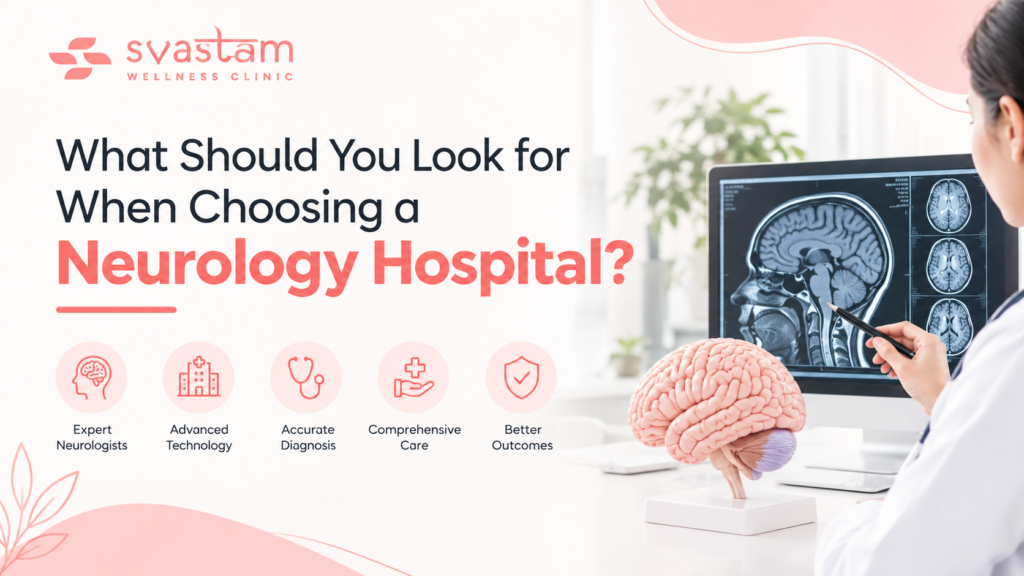
What Should You Look for When Choosing a Neurology Hospital?
Before choosing a hospital or clinic, consider the following factors.
1. Qualified Neurology Specialists
Check whether the facility has qualified neurologists with experience relevant to your symptoms or condition.
For example, patients with recurrent migraine may benefit from consultation with a neurologist experienced in headache disorders, while patients with seizures may require evaluation for epilepsy.
2. Diagnostic Facilities
Neurological symptoms can have many possible causes. Depending on the clinical situation, a doctor may recommend investigations such as:
- MRI or CT imaging
- EEG
- EMG
- Nerve conduction studies
- Blood tests
- Other neurological investigations
The appropriate tests should be determined by the treating doctor based on the patient’s symptoms and examination.
3. Emergency and Stroke Care
If someone develops sudden facial weakness, arm or leg weakness, difficulty speaking, loss of balance, or other sudden neurological symptoms, emergency medical evaluation is important.
For suspected stroke, patients should not wait for a routine appointment. A hospital with emergency and stroke-care facilities may be required.
4. Neurosurgery Availability
Some neurological problems may eventually require surgical evaluation. In such situations, access to neurosurgery can be important.
Safdarjung Hospital, for example, has separate neurology and neurosurgery departments. Its neurosurgery department lists services involving conditions such as brain and spinal cord tumours, head and spinal injuries, vascular conditions, and other neurosurgical problems.
5. Rehabilitation Services
Some neurological conditions can affect walking, movement, speech, strength, or daily activities. Rehabilitation may therefore be an important part of recovery.
When comparing facilities, ask whether appropriate rehabilitation services or referrals are available.
6. Follow-Up Care
Neurological conditions may require more than one consultation. Before selecting a facility, consider whether follow-up appointments and ongoing management are convenient for you.
When Should You See a Neurologist?
Consider consulting a neurologist if you experience persistent, recurrent, or unexplained neurological symptoms such as:
- Frequent or severe headaches
- Recurrent migraine attacks
- Dizziness or vertigo
- Seizures
- Tremors
- Numbness or tingling
- Unexplained weakness
- Balance or coordination problems
- Memory or cognitive changes
- Persistent nerve pain
A neurologist can assess your symptoms, perform a neurological examination, and determine whether further investigations are necessary.
When Is Neurological Care an Emergency?
Some symptoms require urgent medical attention rather than waiting for a routine neurology consultation.
Seek emergency care if there is sudden:
- Weakness or numbness of the face, arm, or leg
- Difficulty speaking or understanding speech
- Severe loss of balance or coordination
- Sudden vision problems
- Loss of consciousness
- A new seizure
- A sudden, unusually severe headache
These symptoms can have serious causes, including stroke, and should be evaluated urgently.
Neurology Consultation in Delhi
For patients looking for outpatient neurological consultation in North Delhi, Svastam Wellness Clinic provides consultation with Dr. Himank Goyal, Consultant Neurologist.
Patients can discuss neurological concerns such as headaches, migraine, dizziness, vertigo, nerve-related symptoms, and other neurological problems during a consultation. The doctor can assess the symptoms and determine whether further diagnostic evaluation or specialist care is required.
For conditions requiring emergency or inpatient treatment, patients should seek an appropriate hospital emergency department rather than relying on a routine outpatient consultation.
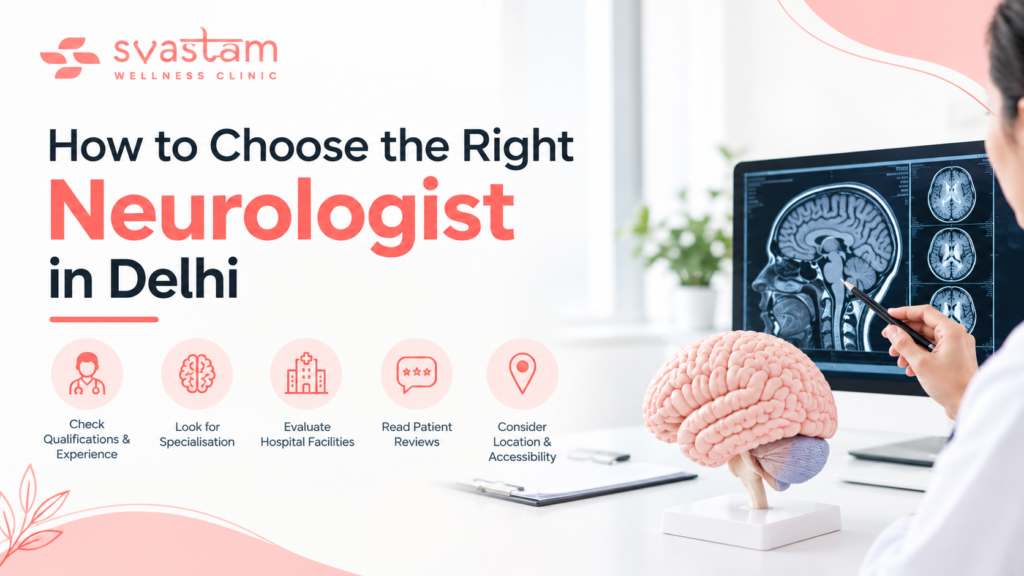
How to Choose the Right Neurologist in Delhi
Instead of choosing a neurologist only because of a search ranking or online description, consider:
- The doctor’s qualifications and specialization
- Experience relevant to your symptoms
- Availability of diagnostic investigations when required
- Follow-up arrangements
- Location and accessibility
- Whether hospital-based care is required for your condition
A consultation with a qualified neurologist can help clarify the cause of symptoms and identify the appropriate next step.
Frequently Asked Questions
Which hospital is best for Neurology in Delhi?
There is no single hospital that is best for every neurological condition. The appropriate hospital depends on the patient’s diagnosis, specialist requirement, diagnostic needs, emergency status, and treatment complexity. Major hospitals such as AIIMS and V.M.M.C. & Safdarjung Hospital have dedicated neurology departments with multiple neurological services.
How do I choose a good neurologist in Delhi?
Look for a qualified neurologist whose experience and area of practice are relevant to your symptoms. You should also consider diagnostic facilities, follow-up availability, location, and whether hospital-based care may be required.
When should I see a neurologist for a headache?
If headaches are frequent, recurrent, severe, changing in pattern, associated with neurological symptoms, or interfering with daily activities, a medical evaluation may be appropriate.
Which doctor treats migraine?
A neurologist can evaluate recurrent or difficult-to-manage migraine and determine an appropriate treatment plan.
Which doctor treats vertigo?
Vertigo can have several possible causes. Depending on the symptoms, a neurologist or another appropriate specialist may evaluate the condition.
Which doctor treats epilepsy?
Epilepsy is generally evaluated and managed by a neurologist, particularly when seizures are recurrent or require specialized assessment.
What tests are used to diagnose neurological problems?
The tests depend on the patient’s symptoms and examination. Depending on the situation, a doctor may recommend MRI, CT, EEG, EMG, nerve conduction studies, blood tests, or other investigations.
Should I visit a hospital or a neurology clinic?
For emergency symptoms, sudden neurological changes, suspected stroke, or conditions requiring admission, seek emergency hospital care. For non-emergency symptoms, an outpatient neurologist consultation may be an appropriate first step.
Conclusion
Choosing the right place for neurological care in Delhi depends on the type and severity of the neurological problem. A hospital with emergency, inpatient, diagnostic, neurology, neurosurgery, and rehabilitation services may be appropriate for complex or urgent conditions, while an outpatient neurology clinic can be suitable for many non-emergency consultations.
If you are experiencing persistent or unexplained neurological symptoms, consulting a qualified neurologist can help determine the appropriate diagnosis, investigations, and treatment pathway.
Svastam Wellness Clinic offers outpatient neurology consultation with Dr. Himank Goyal, Consultant Neurologist, in Delhi.