
Acne scars can remain on the skin even after active acne has healed. They may appear as small pits, deep depressions, uneven skin texture, or raised scars. If you are wondering the best treatment for acne scars, the answer depends on the type, depth, severity, and location of the scars, as well as your skin type and whether you still have active acne.
There is no single treatment that is best for every acne scar. A dermatologist may recommend treatments such as laser therapy, micro-needling, chemical peels, sub-cision, or a combination of procedures after examining your skin.
For people looking for Acne Scar Treatment in Delhi, a professional skin assessment can help determine which treatment approach is appropriate for their individual concerns.
Quick Answer: What Is the Best Treatment for Acne Scars?
The best treatment for acne scars depends on your specific scar type, depth, severity, and skin type. There is no single treatment that works equally well for every scar. A dermatologist may recommend treatments such as TCA CROSS, subcision, laser resurfacing, microneedling, chemical peels, dermal fillers, or a combination of treatments, depending on the individual case.
It is also important to distinguish true acne scars from post-acne marks. Depressed or raised scars involve changes in the skin’s structure, while red or brown marks are usually related to post-inflammatory erythema or hyperpigmentation and may require different treatment.
Before starting acne scar treatment, active acne should generally be controlled to reduce ongoing inflammation and help prevent new scars.
What Are Acne Scars?
Acne scars are changes in the skin that remain after acne has healed. Severe or inflamed acne can damage the deeper layers of the skin and affect collagen production during the healing process.
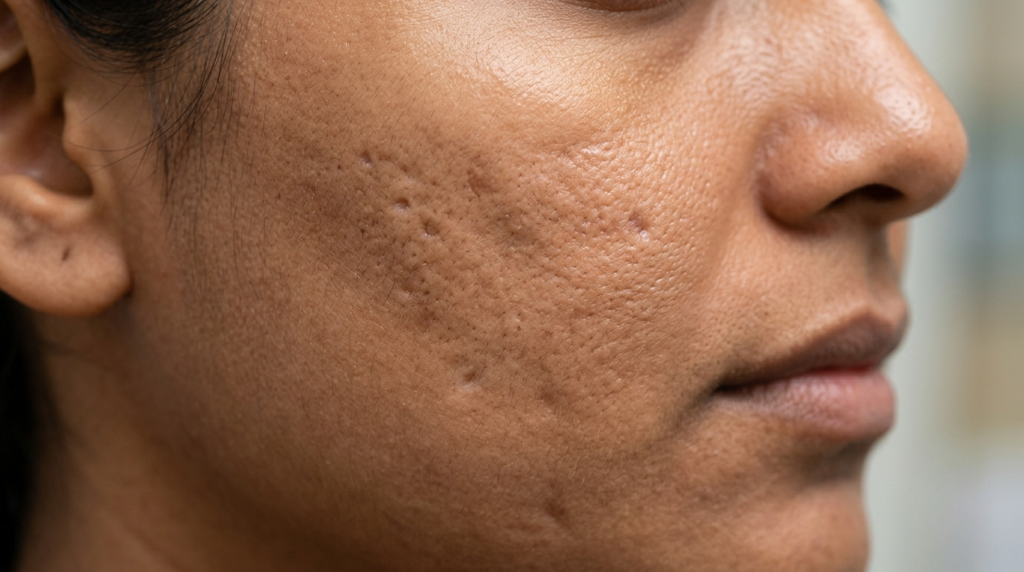
Acne scars are different from temporary acne marks. Marks may gradually fade with time, while true acne scars involve changes in the skin’s texture or structure and may require professional treatment.
Common acne scars include:
- Depressed or indented scars
- Ice pick scars
- Boxcar scars
- Rolling scars
- Raised or hypertrophic scars
Understanding the type of scar is an important first step when choosing treatment.
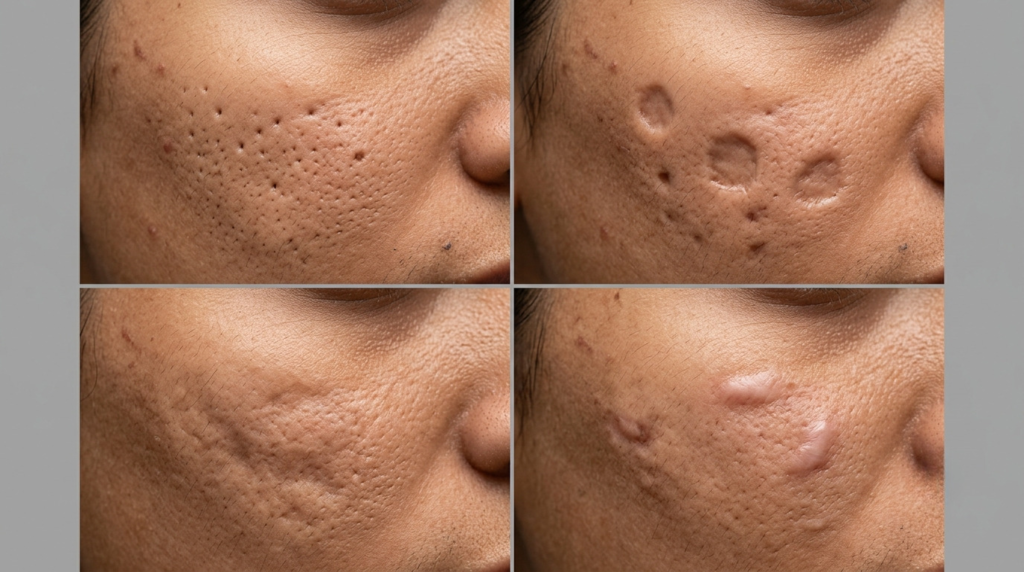
What Are the Different Types of Acne Scars?
1. Ice Pick Scars
Ice pick scars are small but deep depressions that can make the skin appear as though it has been punctured. They can be more challenging to treat and may require specialized procedures or a combination approach.
2. Boxcar Scars
Boxcar scars are wider depressions with relatively defined edges. Depending on their depth and characteristics, treatments such as laser therapy, micro-needling, or other dermatologist-directed procedures may be considered.
3. Rolling Scars
Rolling scars create an uneven or wave-like appearance on the skin. They may occur when scar tissue pulls the skin downward. Treatments such as subcision, microneedling, laser procedures, or combinations may be considered depending on the individual case.
4. Raised Acne Scars
Some people develop raised scars because of excess collagen during healing. These scars are different from depressed scars and require a different treatment approach.
What Is the Best Treatment for Acne Scars?
The best treatment for acne scars depends on the individual scar type and skin condition. A dermatologist may recommend one treatment or combine different approaches to improve skin texture and the appearance of scars.
Some commonly used professional treatment options include:
Laser Treatment for Acne Scars
Laser treatments can help improve skin texture and stimulate collagen remodeling. They may be considered for certain types of depressed acne scars and uneven skin texture.
The type of laser and treatment settings depend on factors such as scar characteristics and skin type. A dermatologist should determine whether laser treatment is appropriate for your skin.
Microneedling for Acne Scars
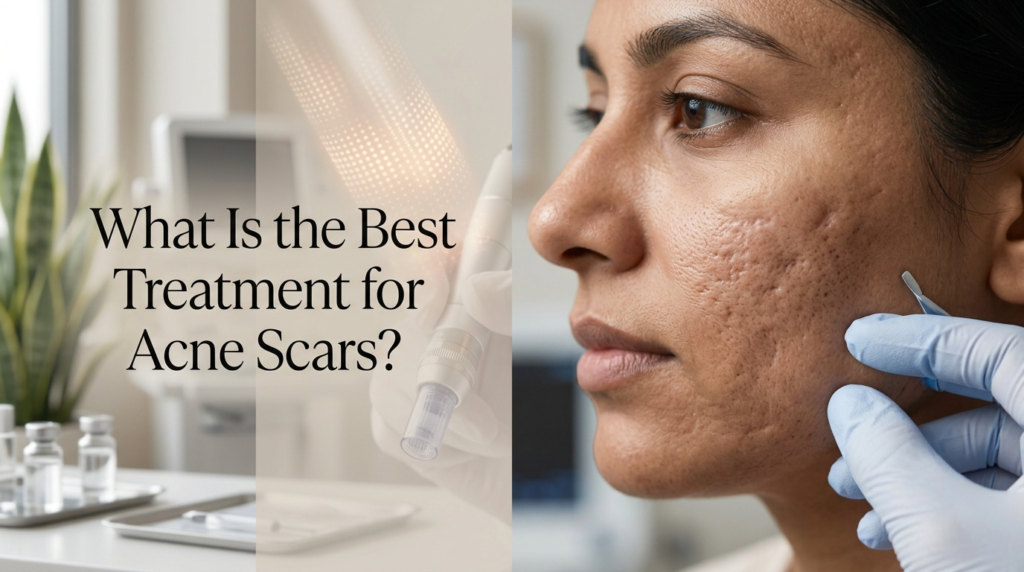
Microneedling uses very small needles to create controlled micro-injuries in the skin. This process can stimulate the body’s natural healing response and collagen production.
It may be useful for improving the appearance of certain acne scars and uneven skin texture. Multiple sessions may be recommended depending on the severity of the scars.
Chemical Peels
Chemical peels use carefully selected chemical solutions to improve the appearance and texture of the skin. Certain peels may help with superficial acne-related changes and pigmentation.
The appropriate type and strength of peel should be selected by a qualified professional based on the individual’s skin and concern.
Subcision
Subcision is a procedure used for certain depressed scars, particularly scars that are tethered to deeper tissues.
During the procedure, a specialized needle is used to release the fibrous bands beneath the scar. It may sometimes be combined with other acne scar treatments for a more comprehensive approach.
Combination Treatment
Acne scars are often different from one another, even on the same face. One person may have rolling scars along with boxcar or ice pick scars.
For this reason, a dermatologist may recommend a combination of procedures rather than relying on one treatment. The treatment plan is usually based on the scar type, depth, skin type, and desired improvement.
Which Acne Scar Treatment Is Right for You?
Different scars can require different treatment approaches.
| Acne Scar Type | Possible Treatment Approaches |
|---|---|
| Ice Pick Scars | Specialized procedures or combination treatment |
| Boxcar Scars | Laser, microneedling, or other dermatologist-directed procedures |
| Rolling Scars | Subcision, microneedling, laser, or combination treatment |
| Uneven Skin Texture | Laser, microneedling, or selected chemical peels |
| Raised Scars | Dermatologist-directed scar management |
This table is a general guide. A dermatologist should examine the skin before deciding which procedure is appropriate.
How Many Sessions Are Needed for Acne Scar Treatment?
The number of treatment sessions varies from person to person. It depends on:
- Type of acne scars
- Depth and severity
- Skin type
- Treatment selected
- Response to treatment
- Whether multiple treatments are being combined
Acne scar improvement is generally gradual because some treatments work by stimulating collagen remodeling. Your dermatologist can provide a more personalized treatment plan after examining your skin.
Can Acne Scars Be Completely Removed?
Acne scar treatments can improve the appearance, texture, and depth of many scars, but complete removal cannot always be guaranteed.
The results depend on factors such as:
- Scar type
- Scar depth
- Duration of the scar
- Skin characteristics
- Treatment selected
- Individual healing response
The goal of treatment is generally to make scars less noticeable and improve overall skin texture.
What Should You Do Before Acne Scar Treatment?
Before starting treatment, it is important to have your skin evaluated by a dermatologist.

You may be advised to:
- Identify the type of acne scars.
- Control active acne if it is still present.
- Discuss your current skincare products and medications.
- Follow recommended sun protection.
- Avoid picking or squeezing active acne.
- Follow the preparation instructions provided by your dermatologist.
Treating active acne is also important because new acne lesions can lead to additional scars.
What Should You Do After Acne Scar Treatment?
After a professional acne scar procedure, follow the aftercare instructions provided by your dermatologist.
General guidance may include:
- Use sunscreen as recommended.
- Keep the skin moisturized.
- Avoid unnecessary irritation.
- Do not pick or scratch treated areas.
- Avoid introducing new active skincare products without professional advice.
- Follow the recommended follow-up schedule.
Aftercare can vary depending on the procedure performed.
How to Choose the Best Treatment for Acne Scars
Instead of choosing a treatment based only on its popularity, consider the characteristics of your individual scars.
A dermatologist may assess:
- Type of acne scar
- Scar depth
- Skin type
- Current acne activity
- Previous treatments
- Skin sensitivity
- Expected downtime
- Desired improvement
This assessment helps determine whether a single treatment or a combination approach is more suitable.
Acne Scar Treatment in Delhi
If you are searching for Acne Scar Treatment in Delhi, professional evaluation is an important first step.
At Svastam Wellness Clinic, acne scars can be assessed based on their type, severity, and skin characteristics. Depending on the individual’s concerns, a dermatologist may recommend an appropriate treatment approach and skincare plan.
The focus should be on selecting a treatment that is suitable for your skin rather than assuming that one procedure works equally well for everyone.
Frequently Asked Questions
What is the best treatment for acne scars?
The best treatment depends on the type and severity of the acne scars. Depending on the individual case, a dermatologist may recommend laser treatment, microneedling, chemical peels, subcision, or a combination of procedures.
Can deep acne scars be treated?
Yes, many types of deep acne scars can be improved with professional treatment. The appropriate procedure depends on whether the scars are ice pick, boxcar, rolling, or another type.
Is laser treatment good for acne scars?
Laser treatment can help improve the appearance and texture of certain acne scars. However, the appropriate laser and treatment settings depend on the individual’s scar type and skin characteristics.
Can microneedling improve acne scars?
Microneedling can improve the appearance of certain acne scars by stimulating collagen production and skin remodeling. Multiple sessions may be required depending on the individual.
How long does acne scar treatment take?
Treatment time varies according to the procedure. Some treatments require multiple sessions spaced apart, while improvement may continue gradually as the skin remodels.
Can acne scars come back after treatment?
Treated scars generally do not simply return in the same way, but new acne can cause new scars. Managing active acne is therefore an important part of long-term scar prevention.
When should I see a dermatologist for acne scars?
Consider seeing a dermatologist if acne scars are persistent, deep, affecting your confidence, or not improving with regular skincare. A dermatologist can identify the scar type and discuss suitable treatment options.
Final Takeaway
There is no single best treatment for acne scars for everyone. The right approach depends on the type, depth, severity, and characteristics of the scars. Professional treatments such as laser therapy, micro needling, chemical peels, subcision, and combination approaches may be considered depending on the individual.
If you are looking for Acne Scar Treatment in Delhi, a dermatologist consultation can help you understand your scar type and create a treatment plan suited to your skin.