
A stroke occurs when blood flow to part of the brain is interrupted or when a blood vessel in the brain ruptures. Common early warning signs include sudden facial drooping, weakness or numbness in one arm or leg, difficulty speaking, blurred vision, dizziness, loss of balance and a sudden severe headache. Remember the FAST method: Face, Arms, Speech and Time. A suspected stroke is a medical emergency and requires immediate hospital attention.
A stroke is a serious medical condition that occurs when the blood supply to the brain is interrupted or when bleeding develops inside or around the brain. Since brain cells need a continuous supply of oxygen and nutrients, even a short interruption in blood flow can cause damage.
Recognising the early warning signs of a stroke can make an important difference in a patient’s outcome. However, many people mistake the initial symptoms for tiredness, weakness, dizziness or an ordinary headache.
Understanding the symptoms and knowing when to seek emergency medical assistance are essential. If you or someone around you experiences sudden signs of a stroke, do not wait for the symptoms to disappear.
What Are the First Signs of a Stroke?
Stroke symptoms usually develop suddenly. The warning signs can vary depending on which part of the brain is affected.
Some of the most common early signs include:
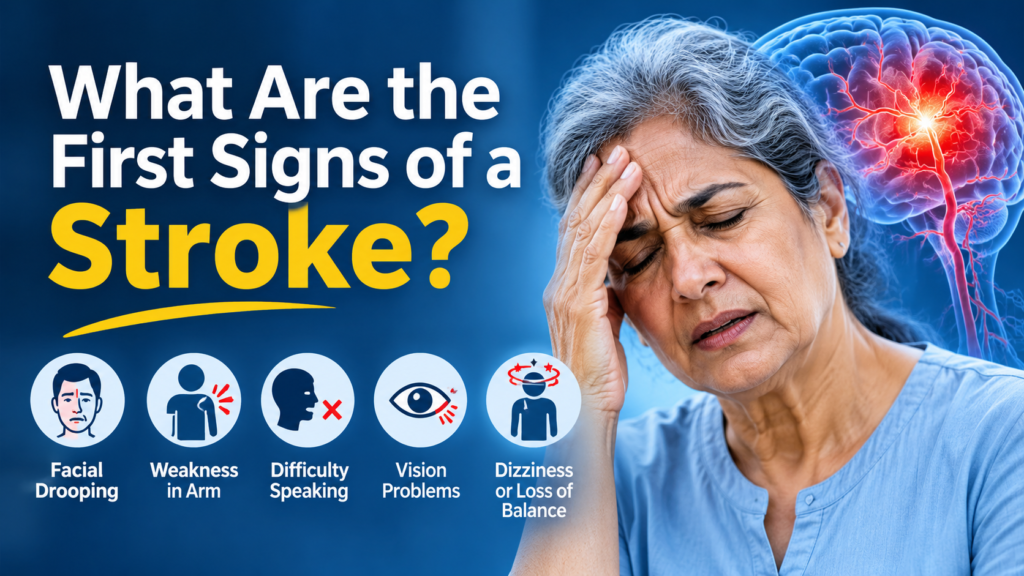
1. Sudden Facial Drooping
One side of the face may suddenly become weak or numb. The person’s smile may appear uneven, with one side of the mouth drooping.
2. Weakness or Numbness in the Arm
Sudden weakness, numbness or difficulty lifting one arm can be a warning sign. Sometimes, the weakness also affects one leg or an entire side of the body.
3. Difficulty Speaking or Understanding Speech
A person experiencing a stroke may suddenly:
- Slur their words.
- Have difficulty speaking clearly.
- Struggle to find the right words.
- Have trouble understanding simple sentences.
4. Sudden Vision Problems
Stroke can affect vision in one or both eyes. Symptoms may include blurred vision, double vision or sudden loss of vision.
5. Sudden Dizziness or Loss of Balance
A person may experience sudden dizziness, difficulty walking, poor coordination or loss of balance. These symptoms can sometimes indicate a stroke affecting the parts of the brain responsible for balance and coordination.
6. Sudden Severe Headache
An unusually severe headache that develops suddenly, particularly with vomiting, neck stiffness, confusion or other neurological symptoms, may indicate bleeding in the brain.
7. Confusion or Difficulty Understanding
Sudden confusion, disorientation or difficulty understanding what other people are saying can also be associated with a stroke.
Important: Not everyone experiences all these symptoms. Even one sudden warning sign should be taken seriously.
What Is the FAST Method for Recognising a Stroke?
The FAST method is a simple way to recognise some of the most common stroke symptoms.
F – Face: Ask the person to smile. Does one side of the face droop?
A – Arms: Ask the person to raise both arms. Does one arm drift downward or fail to move properly?
S – Speech: Ask the person to repeat a simple sentence. Is their speech slurred or difficult to understand?
T – Time: If you notice any of these symptoms, seek emergency medical help immediately. Note the time when the symptoms first appeared.
Recognising FAST symptoms can help people identify a possible stroke quickly. However, some strokes cause symptoms such as sudden vision changes, severe dizziness or balance problems without the typical FAST signs.
What Causes a Stroke?
A stroke generally occurs due to one of two main mechanisms:
1. Ischemic Stroke
An ischemic stroke occurs when a blood clot or blockage prevents blood from reaching part of the brain. It is the most common type of stroke.
2. Hemorrhagic Stroke
A hemorrhagic stroke occurs when a blood vessel in the brain ruptures, causing bleeding in or around the brain. High blood pressure and certain blood vessel abnormalities can contribute to this condition.
What Are the Common Risk Factors for Stroke?
Several health conditions and lifestyle factors can increase the risk of stroke.
Common risk factors include:
- High blood pressure.
- Diabetes.
- High cholesterol.
- Smoking and tobacco use.
- Heart disease, including atrial fibrillation.
- Obesity and physical inactivity.
- Excessive alcohol consumption.
- Increasing age.
- Previous stroke or transient ischemic attack (TIA).
- Family history of stroke.
Managing these risk factors through medical supervision and healthy lifestyle habits can help reduce the risk of stroke.
What Should You Do If Someone Shows Signs of a Stroke?
A suspected stroke requires immediate emergency medical attention. Do not wait to see whether the symptoms improve.
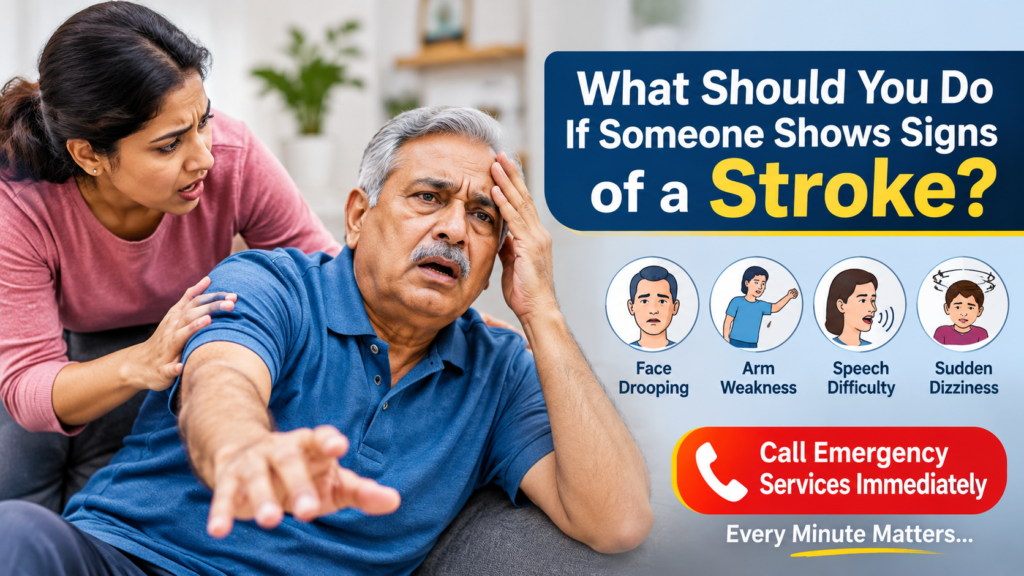
Follow these precautions:
- Call emergency medical services immediately.
- Note the exact time when the symptoms started or when the person was last known to be well.
- Keep the person safe and comfortable while waiting for medical assistance.
- Do not give food, water or oral medication because swallowing may be affected.
- Do not give aspirin unless a treating medical professional specifically advises it, as some strokes involve bleeding.
- Do not allow the person to drive themselves to the hospital.
- Follow the instructions provided by emergency medical professionals.
Remember: Every minute matters during a suspected stroke. Immediate assessment and treatment can help reduce the risk of serious complications.
Can Stroke Symptoms Disappear on Their Own?
Sometimes, stroke-like symptoms disappear within a short period. This may indicate a transient ischemic attack (TIA), commonly known as a mini-stroke.
A TIA occurs when blood flow to part of the brain is temporarily interrupted. Symptoms may include facial weakness, difficulty speaking, vision problems or sudden weakness in an arm or leg.
Even if these symptoms disappear, a TIA should never be ignored. It can be a warning sign of a future stroke and requires urgent medical evaluation.
How Is a Stroke Diagnosed?
Doctors assess suspected stroke patients urgently to identify the cause and determine the appropriate treatment.
Depending on the patient’s condition, the evaluation may include:
- Medical history and symptom assessment.
- Neurological examination.
- Blood pressure and blood glucose assessment.
- CT scan of the brain.
- MRI of the brain.
- Blood tests.
- ECG and heart-related investigations.
- Blood vessel imaging when required.
Brain imaging is particularly important because doctors need to distinguish between an ischemic stroke and a hemorrhagic stroke before deciding on treatment.
Why Is Early Stroke Treatment Important?
Early treatment is essential because prolonged interruption of blood flow can cause permanent brain damage.
Depending on the type of stroke, its severity and the time since symptoms began, treatment may include:
- Clot-dissolving medication for eligible patients with ischemic stroke.
- Mechanical thrombectomy to remove certain blood clots.
- Medical management to control blood pressure and other complications.
- Treatment to manage bleeding in hemorrhagic stroke.
- Rehabilitation, including physiotherapy, occupational therapy and speech therapy.
Not every treatment is suitable for every patient. The treating stroke team determines the appropriate approach after emergency evaluation and investigations.
When Should You Consult a Stroke Specialist in Delhi?
You should seek emergency medical attention immediately if you notice sudden facial drooping, weakness on one side of the body, difficulty speaking, sudden vision loss, severe dizziness or an unusual severe headache.
After emergency stabilisation, a neurologist or stroke specialist can help assess the underlying cause, manage risk factors, plan further treatment and guide recovery.
If you are looking for a Stroke Specialist in Delhi, choose a qualified neurologist and an appropriate hospital or stroke-care facility equipped to handle emergencies. Do not delay emergency hospital care while arranging an outpatient consultation.
At Svastam Wellness Clinic, Dr. Himank Goyal, Consultant Neurologist, provides neurological consultation and evaluation for patients with neurological concerns. Patients can seek professional guidance regarding neurological symptoms, follow-up care and stroke-related risk factors.
Frequently Asked Questions (FAQs)
1. What are the first warning signs of a stroke?
The first warning signs may include sudden facial drooping, weakness in one arm or leg, difficulty speaking, blurred vision, dizziness, loss of balance or a sudden severe headache.
2. How can I identify a stroke at home?
Use the FAST method. Check for facial drooping, weakness in the arms and difficulty speaking. If you notice any of these symptoms, call emergency medical services immediately.
3. Can a stroke happen without warning?
Yes. A stroke can occur suddenly without obvious prior symptoms. However, some people experience a transient ischemic attack (TIA), which can act as an important warning sign.
4. Is a sudden headache a sign of stroke?
A sudden, extremely severe headache can be a warning sign of a hemorrhagic stroke, particularly when accompanied by vomiting, confusion or neurological symptoms. Seek emergency medical attention.
5. Can stroke symptoms go away?
Yes. Symptoms may temporarily disappear in a transient ischemic attack (TIA). However, this still requires urgent medical evaluation because it may signal an increased risk of stroke
Conclusion
Recognising the early warning signs of a stroke can help save lives. Sudden facial drooping, arm weakness, speech difficulties, vision changes and loss of balance should never be ignored.
Remember the FAST method and seek emergency medical help immediately if a stroke is suspected. Early diagnosis, timely treatment and appropriate rehabilitation can play an important role in improving recovery.
For neurological consultation and stroke-related guidance, patients can consult Dr. Himank Goyal, Consultant Neurologist at Svastam Wellness Clinic, Delhi.
Medical Disclaimer: This article is intended for general educational purposes and should not replace professional medical advice, diagnosis or treatment. A suspected stroke is a medical emergency. Call emergency services immediately.