
Healthy, glowing skin is a common skincare goal, but terms such as skin brightening and skin whitening are often used interchangeably. Although they may sound similar, they refer to different skincare goals. Understanding the difference can help you choose suitable treatments for dullness, pigmentation, dark spots, and uneven skin tone.
If you are considering skin whitening treatment in Delhi, it is important to understand which treatments are appropriate for your skin and to seek guidance from a qualified dermatologist.
Quick Answer: Skin Brightening vs Skin Whitening
Skin brightening focuses on improving the appearance of dull skin, reducing the visibility of dark spots, and promoting a more even-looking complexion.
Skin whitening is a commonly used term for treatments intended to lighten skin colour. Some people use it when referring to pigmentation treatments, while others mean changing their natural skin tone. These are not the same goals.
Dermatological care generally focuses on healthy skin, treating excess pigmentation where appropriate, and achieving a more even skin tone rather than changing your natural complexion.
What Is Skin Brightening?
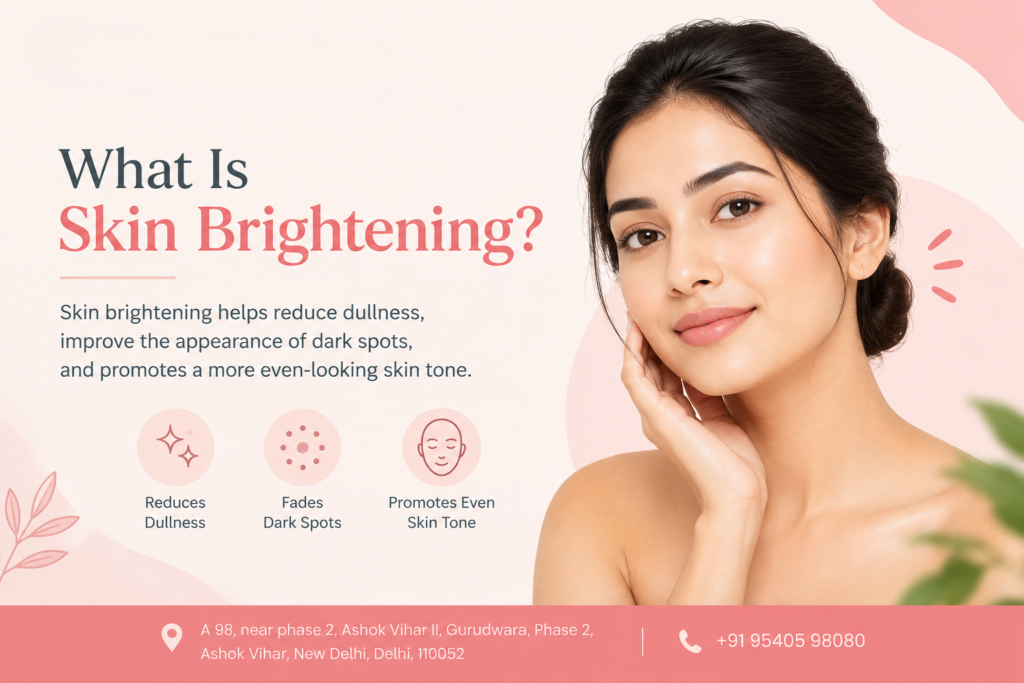
Skin brightening refers to skincare practices and treatments that help improve dullness and uneven skin tone. It may also help reduce the appearance of certain dark spots caused by sun exposure, acne marks, or pigmentation.
Common approaches include:
- Sunscreen: Helps protect skin from ultraviolet radiation and prevents existing pigmentation from becoming darker.
- Vitamin C: A topical antioxidant that may help improve the appearance of uneven skin tone.
- Niacinamide: May support the skin barrier and help reduce the appearance of some dark spots.
- Retinoids: Certain retinoids can help improve skin texture and pigmentation when suitable for the individual.
- Professional dermatological treatments: Depending on the diagnosis, a dermatologist may recommend selected chemical peels or laser-based procedures.
The right approach depends on your skin type, the cause of pigmentation, your medical history, and how sensitive your skin is.
What Is Skin Whitening?
Skin whitening is a broad marketing term used for products and procedures intended to make the skin appear lighter. It can refer to treating localised pigmentation, but it may also refer to attempts to lighten a person’s natural skin colour.
It is important to distinguish between these goals. Treating melasma, acne-related dark marks, or sunspots is different from attempting to change your natural skin tone.
Some products marketed for whitening may contain inappropriate or harmful ingredients. Products containing mercury or potent corticosteroids should not be used for cosmetic skin lightening without appropriate medical indication and supervision. Unregulated bleaching products and unsupervised use of strong lightening agents can cause skin damage and other health problems.
A dermatologist can assess whether the concern is caused by pigmentation, inflammation, sun damage, or another skin condition and recommend appropriate treatment.
Skin Brightening vs Skin Whitening: Key Differences
| Feature | Skin Brightening | Skin Whitening |
|---|---|---|
| Main goal | Improve dullness and uneven-looking skin | Commonly marketed to lighten skin colour |
| Typical concerns | Dark spots, dullness, uneven tone | Pigmentation or attempts to lighten overall complexion |
| Common approaches | Sunscreen, suitable skincare, selected dermatological treatments | Depends on the product or procedure; some options may be unsafe |
| Expected outcome | A healthier-looking, more even complexion | Results vary and may not be safe or appropriate |
| Professional guidance | Helpful for persistent concerns | Especially important to avoid harmful products |
What Causes Uneven Skin Tone and Dark Spots?
Before choosing a treatment, it is important to understand what is causing the change in skin colour.
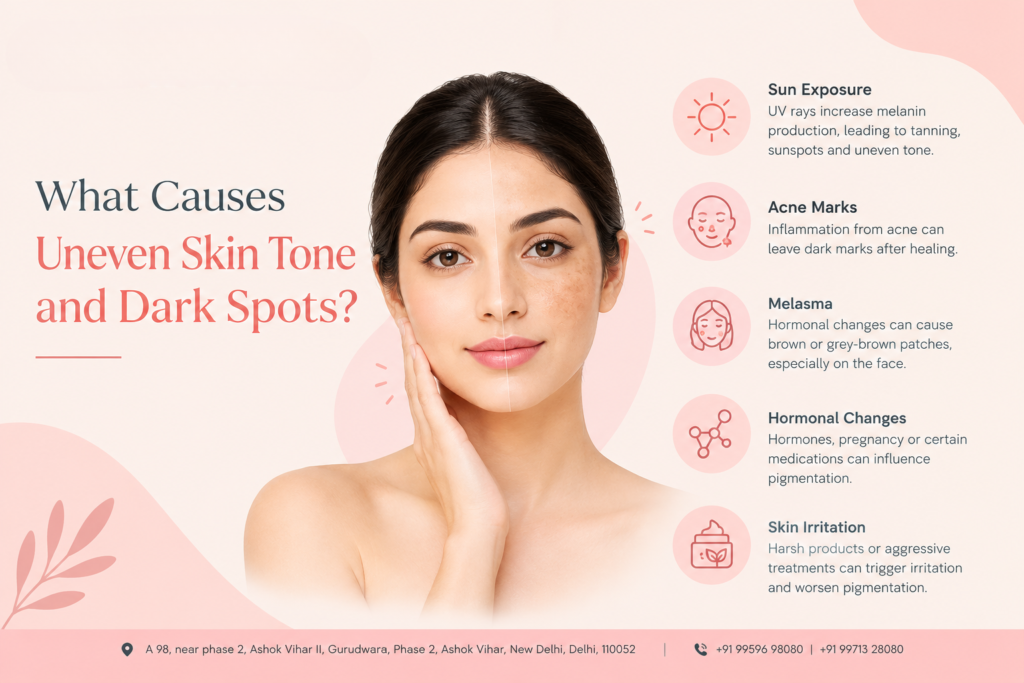
1. Sun Exposure
Ultraviolet radiation can increase melanin production and contribute to tanning, sunspots, and uneven pigmentation. Daily broad-spectrum sunscreen can help protect the skin.
2. Acne Marks
Inflammation caused by acne can leave dark marks after pimples heal. Picking or squeezing pimples may increase the risk of marks and scarring.
3. Melasma
Melasma causes brown or grey-brown patches, often on the cheeks, forehead, or upper lip. Sun exposure and hormonal factors can contribute to it.
4. Hormonal Changes
Certain hormonal changes and medications can influence pigmentation. Persistent or unexplained changes should be assessed by a healthcare professional.
5. Skin Irritation
Harsh scrubs, unsuitable skincare products, and aggressive treatments may irritate the skin and worsen pigmentation, particularly in people prone to post-inflammatory hyperpigmentation.
Which Treatments May Help Improve Uneven Skin Tone?
There is no single treatment that works for every type of pigmentation. A dermatologist may recommend one or more of the following depending on the underlying cause.
1. Daily Sunscreen
Broad-spectrum sunscreen with SPF 30 or higher is an important part of managing many pigmentation concerns. Reapplication, protective clothing, and limiting excessive sun exposure can help support treatment results.
2. Topical Skincare Products
Ingredients such as vitamin C, niacinamide, azelaic acid, or selected retinoids may help with certain pigmentation concerns. Not every ingredient is suitable for every person, and some may cause irritation if used incorrectly.
3. Chemical Peels
A dermatologist may recommend a suitable chemical peel for selected cases of acne marks, superficial pigmentation, or uneven skin texture. The type and strength must be chosen carefully because irritation or an unsuitable peel can worsen pigmentation.
4. Laser-Based Treatments
Certain laser procedures may help treat specific pigmentation concerns. However, treatment choice depends on the diagnosis, skin tone, and risk of side effects. Burns and post-inflammatory hyperpigmentation are possible, so professional assessment is important.
5. Treatment for the Underlying Skin Condition
If pigmentation is associated with acne, melasma, or another skin condition, addressing the underlying cause is an essential part of care. Pigmentation may return, and maintenance treatment may be necessary.
Is Skin Brightening Safe for All Skin Types?
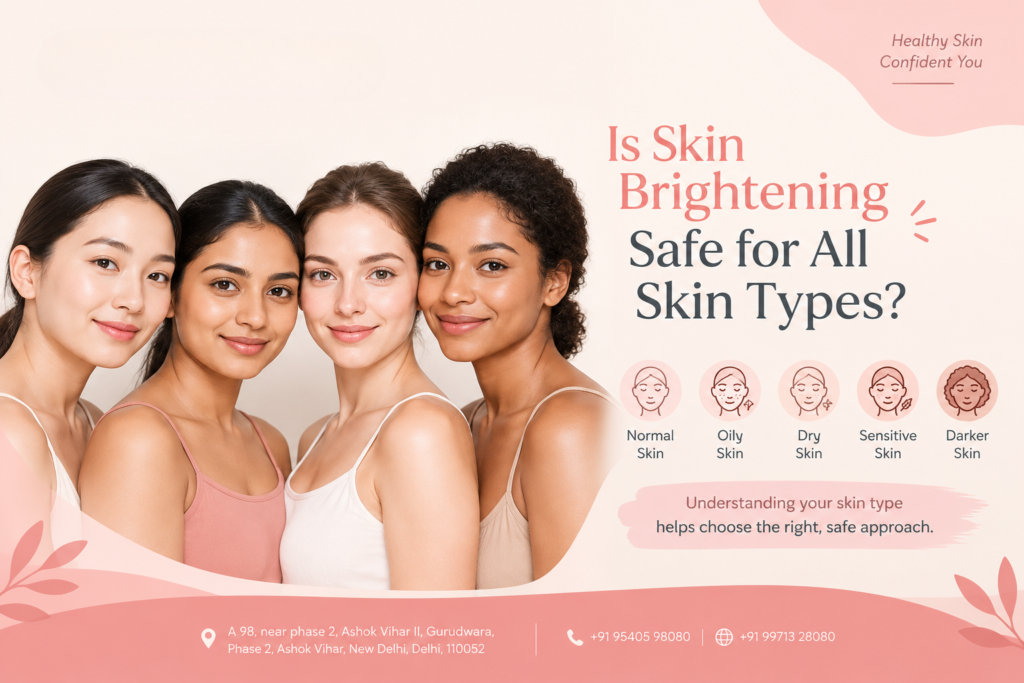
Not every brightening product or procedure is suitable for everyone. People with sensitive skin or darker skin tones may have a greater risk of pigmentation following irritation or certain procedures.
To reduce avoidable risks:
- Use sunscreen regularly.
- Introduce new skincare products gradually.
- Avoid unlabelled or unregulated whitening creams.
- Do not use strong bleaching agents or prescription medicines without medical guidance.
- Avoid combining multiple strong active ingredients without professional advice.
- Consult a dermatologist if pigmentation is persistent, worsening, or unexplained.
Be cautious of treatments promising permanent whitening, instant results, or a guaranteed change in natural skin colour.
When Should You Consult a Dermatologist?
Consider a dermatology consultation if you have persistent dark spots, melasma, acne marks, uneven skin tone, irritation from whitening products, or pigmentation that keeps returning despite skincare.
A dermatologist can assess the cause, explain suitable options, discuss expected results and risks, and help you build a skincare plan that fits your needs.
If you are looking for skin whitening treatment in Delhi, choose care based on a proper skin assessment rather than selecting a procedure solely because it is advertised as a whitening treatment.
Frequently Asked Questions
1. Is skin brightening the same as skin whitening?
No. Skin brightening usually focuses on dullness, dark spots, and uneven skin tone. Skin whitening is a broader term that may refer to pigmentation treatment or attempts to lighten natural skin colour.
2. Which is better: skin brightening or skin whitening?
For most people concerned about dullness or dark spots, a skin-health-focused approach to brightening and treating pigmentation is more appropriate than trying to change their natural skin colour. The best option depends on the underlying concern.
3. Can skin brightening remove pigmentation?
Some skincare ingredients and professional treatments can reduce certain types of pigmentation. Results depend on the cause, depth, and duration of pigmentation, and maintenance may be required.
4. Is laser treatment safe for pigmentation?
Laser treatment can help with selected pigmentation concerns, but it is not suitable for every condition. Incorrect treatment settings or unsuitable procedures may cause burns or worsen pigmentation. A dermatologist should assess the skin before treatment.
5. How long does skin brightening take?
The timeline varies by condition and treatment. Some concerns may improve over several weeks, while melasma and persistent pigmentation may require months of treatment and ongoing maintenance.
6. Can home remedies whiten the skin?
Home remedies are not a reliable way to change natural skin colour. Ingredients such as lemon juice may irritate the skin, and irritation can make pigmentation worse. Evidence-based skincare and professional advice are safer approaches.
7. How can I choose a skin treatment clinic in Delhi?
Look for qualified dermatology care, an appropriate skin assessment, clear explanations of benefits and risks, suitable hygiene standards, and realistic expectations. Avoid clinics or products that promise guaranteed or permanent skin whitening.
Conclusion
Skin brightening and skin whitening are not identical. Brightening generally aims to improve dullness and uneven pigmentation, while whitening may refer to a wider range of practices, including attempts to lighten natural skin colour. Safe and effective care begins with understanding your skin concern and choosing evidence-based treatment.
Svastam Wellness Clinic offers dermatology consultations to help patients understand their skin concerns and explore suitable treatment options. Consult Dr. Neeharika Goyal, Consultant Dermatologist, for personalised guidance based on your skin’s needs.
Medical disclaimer: This article is for educational purposes only and is not a substitute for professional medical advice, diagnosis, or treatment.