
Knowing when to see a neurologist is important when you experience persistent headaches, repeated migraine attacks, numbness, muscle weakness, dizziness, or changes in memory and coordination. Although some symptoms may have common causes, recurring or unexplained neurological symptoms may require medical evaluation.
A neurologist is a medical specialist who diagnoses and manages conditions affecting the brain, spinal cord, nerves, and muscles. Recognizing warning signs and seeking appropriate medical advice can help you understand the cause of your symptoms and determine the next steps.
At Svastam Wellness Clinic in Ashok Vihar, Delhi, patients can enquire about neurological consultation with Dr. Himank Goyal, Consultant Neurologist.
What Does a Neurologist Do?
A neurologist evaluates conditions affecting the nervous system. These conditions can influence movement, sensation, balance, memory, speech, and other essential functions.
A neurologist may assess symptoms associated with:
- Migraine and recurring headaches
- Epilepsy and seizure disorders
- Stroke-related neurological problems
- Tremors and movement disorders
- Numbness and peripheral nerve problems
- Memory and cognitive changes
- Dizziness and balance difficulties
- Certain muscle and nerve conditions
The appropriate treatment depends on the diagnosis, medical history, and individual symptoms.
When to See a Neurologist: 10 Warning Signs
You should consider consulting a neurologist when neurological symptoms are persistent, recurrent, unexplained, worsening, or affecting your everyday activities.
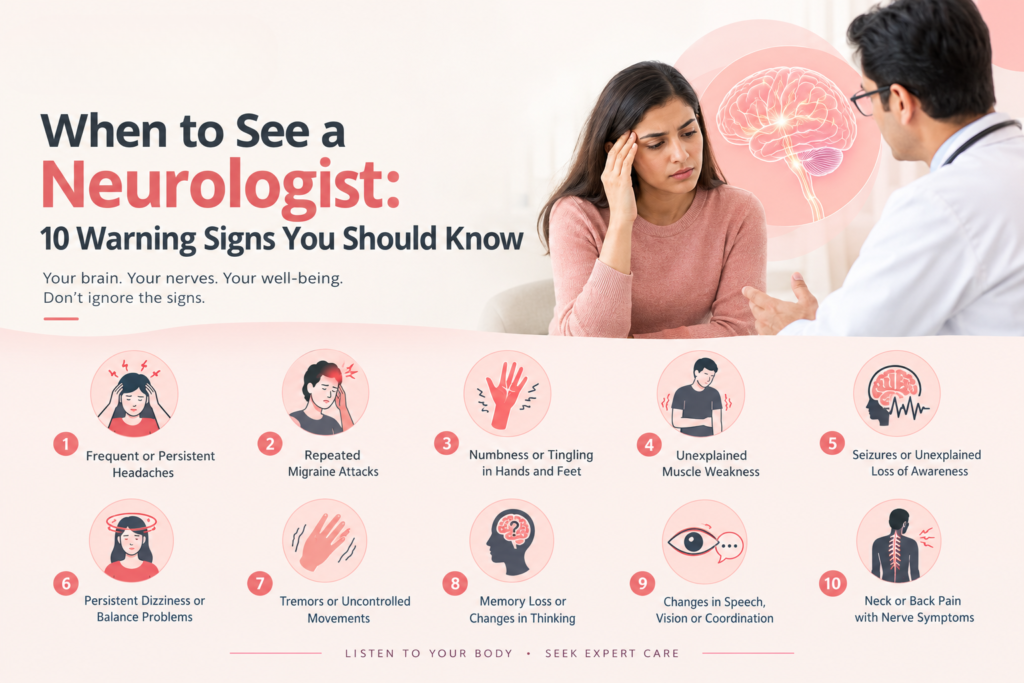
1. Frequent or Persistent Headaches
Occasional headaches can occur because of dehydration, stress, poor sleep, or other common factors. However, headaches that happen frequently, interfere with daily activities, or change in severity or pattern deserve medical attention.
A neurologist can assess possible causes, including migraine, tension-type headaches, and other conditions.
A sudden, extremely severe headache, particularly one that reaches maximum intensity within seconds, requires emergency medical assessment.
2. Repeated Migraine Attacks
Migraine may cause moderate to severe headaches, nausea, and sensitivity to light or sound. Some people also experience visual disturbances or other symptoms known as aura.
If migraine attacks repeatedly affect your work, sleep, or daily routine, a neurologist can assess your symptoms and discuss appropriate treatment and prevention options.
Keeping a headache diary can help you record the frequency, duration, possible triggers, and medicines used during attacks.
3. Numbness or Tingling in the Hands and Feet
Persistent numbness, burning sensations, or pins and needles may indicate a problem affecting the nerves.
Possible causes include nerve compression, diabetes-related nerve damage, vitamin deficiencies, and other medical conditions.
A neurologist can evaluate the location and pattern of your symptoms and recommend further tests when appropriate.
Sudden numbness, especially on one side of the body, requires emergency assessment because it can be a sign of stroke.
4. Unexplained Muscle Weakness
If you experience unexplained weakness in your arms, legs, hands, or feet, seek medical advice.
Difficulty gripping objects, walking normally, lifting your foot, or performing familiar activities may be associated with nerve, muscle, or neurological problems.
Sudden weakness of the face, arm, or leg, particularly on one side, is a medical emergency. Call emergency services immediately.
5. Seizures or Unexplained Loss of Awareness
Seizures do not always involve full-body shaking. They may also cause staring episodes, unusual sensations, involuntary movements, or temporary loss of awareness.
A first suspected seizure requires urgent medical evaluation. A neurologist may recommend investigations to identify the possible cause and determine whether treatment is necessary.
If a seizure lasts five minutes or longer, repeated seizures occur without recovery, or breathing is affected, seek emergency assistance.
6. Persistent Dizziness or Balance Problems
Dizziness may be associated with inner-ear conditions, medication effects, blood pressure changes, or neurological problems.
If dizziness keeps returning or is accompanied by difficulty walking, poor coordination, or unexplained falls, consult a medical professional.
Sudden dizziness with double vision, difficulty speaking, weakness, or severe loss of balance requires emergency assessment.
7. Tremors or Uncontrolled Movements
Tremors are involuntary shaking movements that may affect the hands, head, or other parts of the body.
They can have several causes, including medication effects, thyroid disorders, essential tremor, and neurological conditions such as Parkinson’s disease.
If tremors persist, worsen, or interfere with daily tasks, a neurologist can assess the symptoms and recommend appropriate management.
A tremor alone does not establish a diagnosis of Parkinson’s disease.
8. Memory Loss or Changes in Thinking
Occasionally forgetting something is common. However, persistent memory difficulties, confusion, or changes in thinking that interfere with everyday activities should be evaluated.
Memory problems can have various causes, including sleep difficulties, medication effects, metabolic conditions, and neurological disorders.
A medical assessment can help identify possible contributing factors and determine whether further investigation is needed.
Sudden confusion requires urgent medical attention.
9. Changes in Speech, Vision, or Coordination
New problems with speech, double vision, coordination, or walking may indicate a neurological condition.
These symptoms are particularly concerning when they appear suddenly or occur together.
Sudden facial drooping, difficulty speaking, loss of vision, or weakness affecting one side of the body may indicate a stroke. Call emergency services immediately rather than waiting for a routine neurologist appointment.
10. Neck or Back Pain With Nerve Symptoms
Neck and back pain are common, but pain accompanied by persistent tingling, numbness, radiating pain, or weakness may suggest nerve irritation or compression.
A doctor can evaluate your symptoms and determine whether neurological assessment or other specialist care is appropriate.
New loss of bladder or bowel control, numbness around the groin or saddle area, or rapidly progressing leg weakness requires emergency medical assessment.
When Should You See a Neurologist for Headaches?
Not every headache requires a neurological consultation. However, you should consider medical evaluation when headaches:
- Occur frequently or keep returning
- Become more severe or change in pattern
- Interfere with work, sleep, or daily activities
- Do not improve with your current treatment
- Occur alongside unexplained neurological symptoms
Seek emergency care for a sudden, severe headache or one accompanied by weakness, confusion, fainting, or other serious warning signs.
What Happens During a Neurology Consultation?
A neurology consultation usually begins with a discussion of your symptoms, medical history, medications, and relevant family history.
The neurologist may examine your:
- Muscle strength and reflexes
- Sensation and coordination
- Balance and walking
- Eye movements and vision-related responses
- Speech, memory, and cognitive function
Depending on the findings, further investigations may include blood tests, MRI or CT imaging, electroencephalography (EEG), or nerve conduction studies.
Not every patient needs these tests. The recommended investigations depend on the symptoms and clinical assessment.
How to Prepare for Your First Neurologist Appointment
A little preparation can make your consultation more useful.
- Record your symptoms: Note when they began, how often they occur, and whether they are changing.
- List your medications: Include prescribed medicines and any over-the-counter products you use.
- Bring previous reports: Carry relevant medical records, test results, or imaging reports if available.
- Note possible triggers: For recurring headaches, record sleep patterns, stress, and other possible triggers.
- Prepare your questions: Ask about possible causes, recommended tests, treatment choices, and follow-up.
Do not delay emergency care to collect records or prepare for an appointment if you develop sudden, serious neurological symptoms.
How to Choose a Neurologist in Delhi
If you are looking for a neurologist in Delhi, consider the doctor’s qualifications, professional registration, relevant clinical experience, and ability to explain your symptoms and treatment options clearly.
You should also check whether the clinic can provide appropriate follow-up care and coordinate additional investigations or specialist referrals when necessary.
Your choice should depend on your individual medical needs rather than online rankings alone.
Neurology Consultation at Svastam Wellness Clinic, Delhi
If you have recurring headaches, migraine attacks, persistent numbness, tremors, or other unexplained neurological symptoms, consider seeking an appropriate medical evaluation.
At Svastam Wellness Clinic, Dr. Himank Goyal, Consultant Neurologist, offers neurological consultation for relevant concerns.
Clinic address: A-98, Near Phase 2 Gurudwara, Ashok Vihar Phase 2, New Delhi, Delhi – 110052
Phone: 095405 98080
Website: https://svastamclinic.com/
Contact the clinic to enquire about consultation availability.
If you suspect a stroke or experience sudden, severe neurological symptoms, seek emergency medical care immediately rather than waiting for a routine appointment.
Frequently Asked Questions
1. When to see a neurologist?
Consider seeing a neurologist for recurring headaches, migraine, seizures, persistent numbness, unexplained weakness, tremors, balance difficulties, or ongoing memory changes. Sudden or severe neurological symptoms may require emergency care.
2. What are the signs that you need to see a neurologist?
Common reasons for neurological evaluation include persistent headaches, recurrent seizures, unexplained numbness, muscle weakness, tremors, balance problems, and memory difficulties.
3. Should I see a neurologist for frequent headaches?
A neurological consultation may be appropriate if headaches are frequent, severe, changing in pattern, or difficult to manage. Sudden, extremely severe headaches or headaches accompanied by neurological symptoms require urgent assessment.
4. Can a neurologist treat migraine?
Yes. A neurologist can evaluate migraine symptoms, discuss treatment options, and help develop an appropriate plan to manage attacks and reduce their frequency when possible.
5. When should I see a neurologist for dizziness?
Consider medical evaluation for persistent or recurrent dizziness, especially when it affects walking or balance. Sudden dizziness with double vision, weakness, difficulty speaking, or severe imbalance requires emergency care.
6. What is the difference between a neurologist and a neurosurgeon?
A neurologist diagnoses and manages neurological conditions primarily through non-surgical treatments. A neurosurgeon specializes in surgical treatment of conditions affecting the brain, spine, and nervous system.
7. What tests does a neurologist perform?
Depending on your symptoms, a neurologist may recommend blood tests, MRI or CT scans, EEG, nerve conduction studies, or other investigations. The choice depends on the clinical assessment.
Can stress cause headaches and dizziness?
Stress may contribute to headaches, dizziness, and sleep difficulties, but these symptoms can have other causes. Persistent, worsening, or unexplained symptoms should be assessed rather than automatically attributed to stress.
Conclusion
Understanding when to see a neurologist can help you recognize symptoms that may need medical attention. Persistent headaches, migraine, numbness, weakness, seizures, tremors, and memory changes are among the concerns that may warrant evaluation.
A timely medical assessment can help identify the possible cause and guide appropriate care. If symptoms are sudden or suggest a stroke or another emergency, seek emergency assistance immediately.
For neurological consultation enquiries, contact Svastam Wellness Clinic in Ashok Vihar, Delhi.
Medical disclaimer: This article is for general educational purposes only and does not replace professional medical advice, diagnosis, or treatment.